 ARTCESTRY
Five lost Rubens sketches reunited in Gotha
Five Rubens oil sketches, scattered after the Second World War, now hang together in Gotha, Germany. The show runs to 9 May 2027.
- Dates
- 10 November 2026 to 9 May 2027
- Where
- Niederländersaal, Herzogliches Museum, Gotha
Why it matters
Five works came home by four routes: a 1959 return, a museum transfer, a private settlement and a loan. The reunion took about 80 years and many partners.
How did five small paintings leave one German castle and meet again in a single room? The answer is a chain of returns that took about 80 years. The Art Newspaper reported that the Ducal Museum in Gotha opened the full set on 9 November.
The context
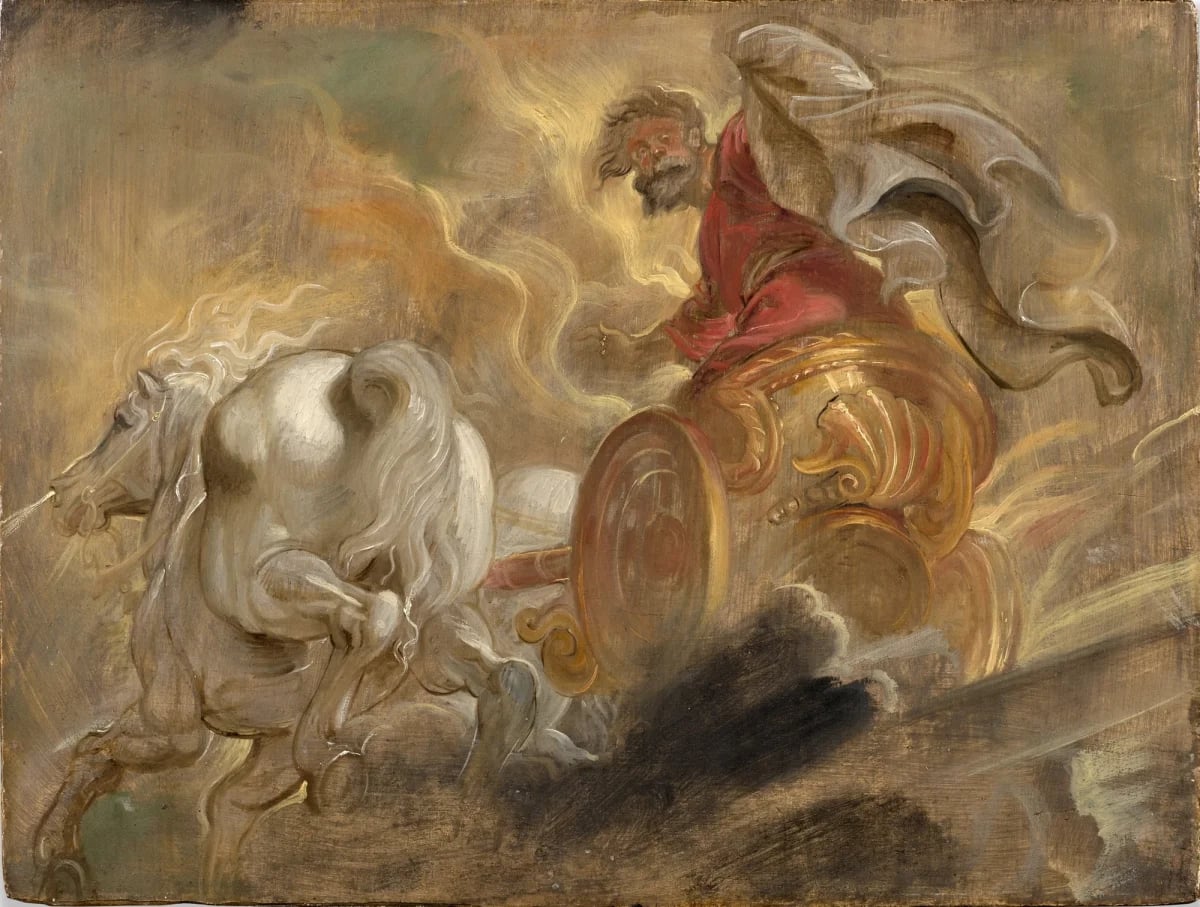
Peter Paul Rubens painted the five oil sketches (small painted studies made before a larger work) on wood in 1620 and 1621. They were plans for ceiling paintings in the Jesuit church in Antwerp. The church burned after a lightning strike in 1718, and the ceiling paintings were lost.
The sketches had hung in Gotha since at least the early 19th century. Duke Ernst II of Saxe-Gotha-Altenburg bought one of them, Saint Augustine, in 1802, the Bührle Collection records. By the end of the Second World War, all five were gone.
How each sketch came home
Two roads led away from Gotha. Representatives of the ducal family, which no longer owned the works, took three sketches as American and Soviet forces closed in. Those three went to Coburg, were sold illicitly and reached the American art market. The Red Army looted the other two, and both came back to Gotha in 1959.
The Bührle Collection dates the move of its sketch from Gotha to Coburg to 27 March 1945. That record also says the Bührle family's heirs gave the work to the foundation in 1960.
The first of the three to return was Saint Gregory of Nazianzus in 2024. A museum in Buffalo, New York, handed it back with help from Christie's. The latest is The Prophet Elijah in the Golden Chariot, which sat in a private American collection. It came back through a settlement mediated by the Paris auction house Cabinet Turquin and paid for by the Ernst von Siemens Art Foundation.
Martin Hoernes, the foundation's secretary general, said a "figure in the low millions" was agreed, below the market price. He called the owners' purchase a "good-faith purchase" and said no one wanted to "criminalise the current owners".
The fifth sketch, Saint Augustine, belongs to the Bührle foundation and is shown at the Kunsthaus Zurich. The foundation agreed to lend it to Gotha. Its record describes the work as oil on wood, 48 by 63.5 centimetres, dated 1620.
The show you can visit
The Friedenstein Foundation lists the show as AUF RUBENS!, from 10 November 2026 to 9 May 2027. It fills the Niederländersaal of the Herzogliches Museum. The newspaper gives 9 November as the opening day, so check the dates before you travel.
The foundation describes the show as a story of loss and return, and it marks Rubens's 450th birthday. Tobias Pfeifer-Helke, who directs the foundation, called it "nothing short of a miracle" that the five studies can be seen together.
Our view
We think the show turns a long, tangled recovery into one room a visitor can see. We would read the label for each sketch, because the sources show that each one took a different route home.
I once spent an hour looking for my glasses, so this effort humbles me.
Would you visit?
Provenance
- Lost Rubens sketches return to German castle after 80 years | The Art Newspaper
- AUF RUBENS! - Der Friedenstein – Gotha | Friedenstein Foundation
- Saint Augustine · Peter Paul Rubens · Stiftung Sammlung E.G. Bührle | Bührle Collection
We remember your likes in this browser for 180 days. Privacy notice.
Join the family
Get Market Insights & Tips directly
Join the family
Comments
Includes replies.
Comments load after the article.